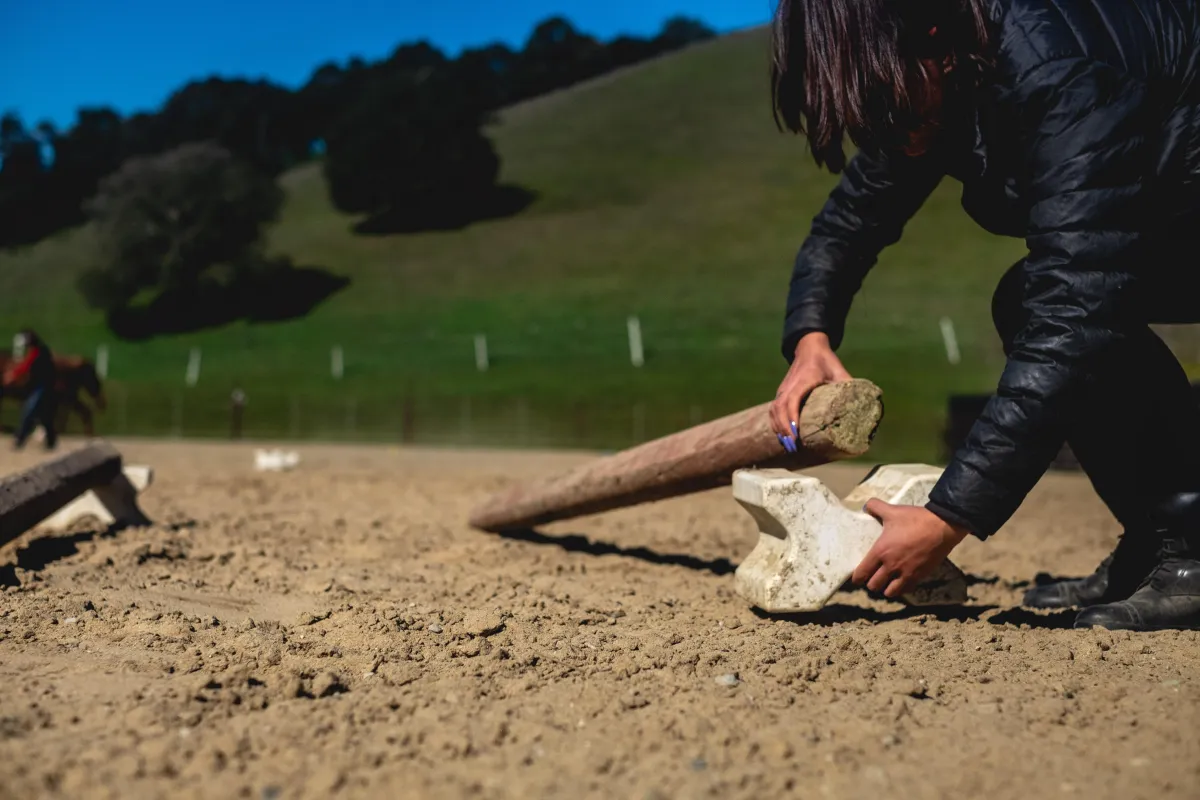
Ground Poles: Riding versus Groundwork Routines
Ground Poles: Riding versus Groundwork Routines
Ground poles are often recommended for rehabilitation, conditioning, or performance development—but rarely with clear guidance on how they should be used. Whether poles are done in-hand or under saddle, slowly or with speed, in small doses or higher volume, dramatically changes their effect on the horse’s body. Understanding these differences allows poles to be used with intention rather than habit.
While some overlap exists, the key distinction is this: groundwork primarily improves neurological organization and posture, while ridden pole work develops strength, sustainability, and power. In simple terms, groundwork improveshow a horse moves; ridden poles strengthen the muscles that support that movement under load.
Groundwork vs. Ridden Poles
Ground poles—whether in-hand or ridden—can influence proprioception, rhythm, posture, trunk engagement, mental focus, and locomotor coordination. However, the pathway to these adaptations differs.
Slow, methodical groundwork emphasizes the nervous system and postural control. Without the added weight of a rider, the horse can recruit deep stabilizing muscles more effectively and receive greater sensory feedback from the limbs. This often reduces unnecessary bracing in the larger locomotive muscles, resulting in a freer topline and improved cervical mobility. Groundwork prepares the body to move with better organization before higher forces are introduced.
It is important to recognize what groundwork doesnot do. When performed at the slow speeds required for proprioceptive and postural gains, it does not meaningfully increase muscle size or strength. Nor does it prepare the horse for high-force athletic tasks. Those adaptations require the additional load and intensity that typically come with riding.
Ridden pole work introduces axial loading, increasing muscle fiber recruitment—particularly in the propulsive and trunk musculature. Trotting over poles, for example, is commonly used to strengthen the thoracolumbar region and hindquarters. The added weight also increases forces through the lower limbs, which can improve tissue resilience when introduced appropriately. Ridden poles at trot and canter further raise cardiovascular demand, supporting aerobic capacity and the ability to sustain quality movement.
These benefits, however, depend on adequate preparation. Introducing ridden pole work too early or in excessive volume can overwhelm tissues that lack sufficient baseline strength.
Progression, Exercises, and Repetitions
Most rehabilitation and early conditioning programs begin with in-hand walking over four to six flat poles in straight lines. Fewer than ten repetitions are sufficient to stimulate sensory feedback and neuromotor organization. Over several weeks, variability can be added through irregular spacing, followed by modest increases in repetitions and eventually raised poles or gently curving patterns.
Ridden horses follow a similar progression, but under greater load and typically at faster speeds. Straight-line trotting over poles is an appropriate starting point, with limited repetitions once or twice weekly. Only after several consistent weeks should riders introduce raised poles, increased volume, or continuous bending patterns, which place greater demands on lateral stability.
Knowing When to Move On
Progression should be guided by the horse’s response, not by time alone. A horse is ready for increased complexity when rhythm remains steady, posture stays elastic, and coordination improves rather than deteriorates with repetition. Loss of straightness, rushed steps, or visible bracing indicate the current level is still sufficient.
The true success of pole work is reflected in carryover. When a horse feels more balanced, organized, and responsive in regular schooling, the exercises have achieved their intended effect.
