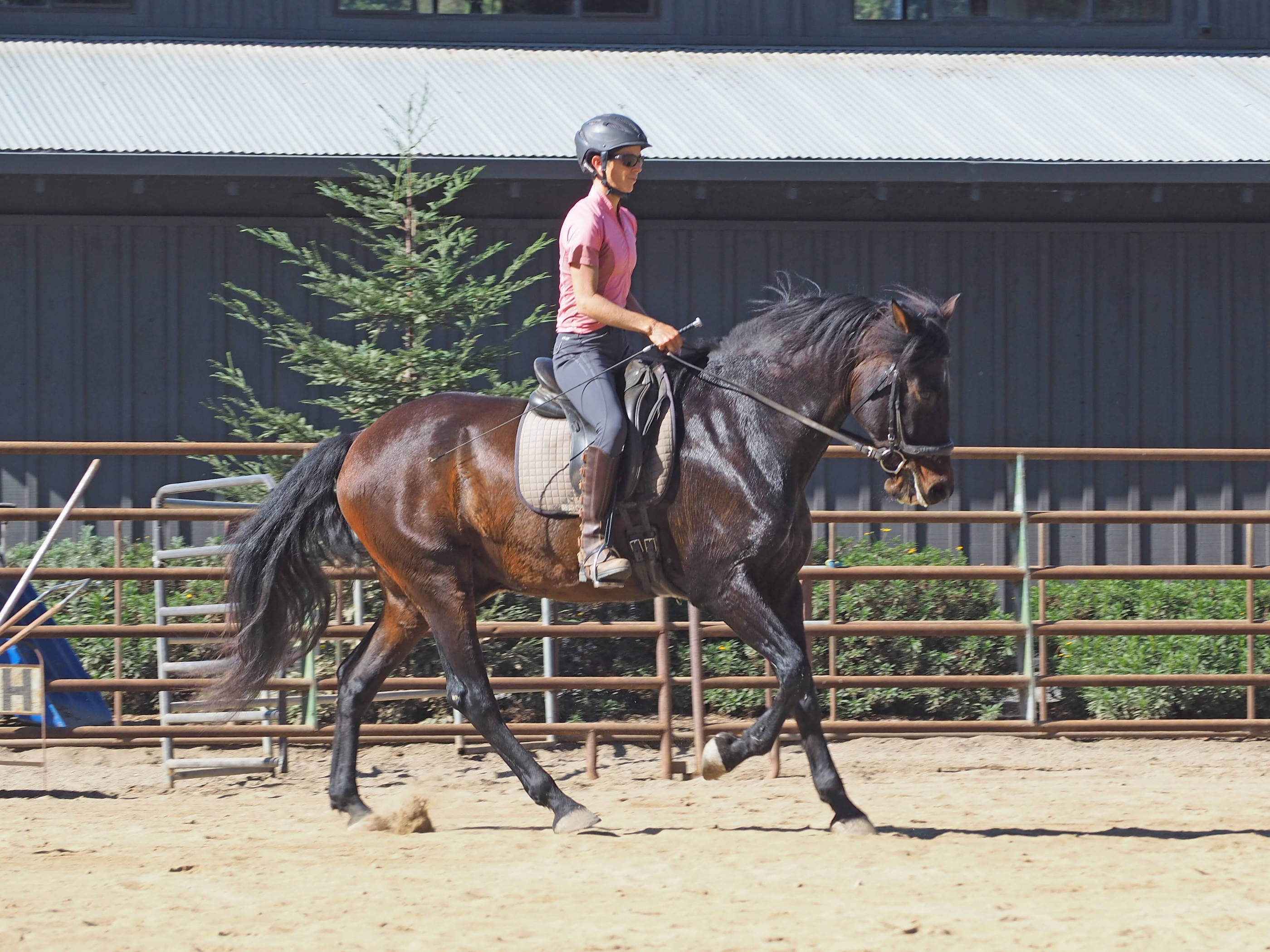
What Canter Really Does: Building Strength in Your Horse
In a recent webinar, I talked about something most riders underestimate: what canter actually does for a horse's body. A lot of people think of canter as the gait for getting the heart rate up, or as something to save for later once the walk and trot are polished. I see it differently. Canter is one of the best strength tools you have, and it does things for your horse that no other gait can match. Here are a few of the ideas we covered.
Why canter does something the other gaits can't
Canter activates the glutes, stabilizes the trunk, and tones the abdominals in a way that walk and trot simply don't. The research on muscle activity backs this up: canter recruits more muscle fibers and produces higher electrical activity in the long backmuscle than the other gaits, while simultaneously increasing force from the main propulsive system, the gluteals. That makes it a strengthening exercise in its own right.
This is where a common misunderstanding comes in. Many people value canter mainly for cardio, so they think of it as a way to get a horse fit in the aerobic sense. The bigger payoff is physiological strength in the hindquarters and core, and once you look at it that way, how you use canter in your training starts to change.
Comfort and rhythm matter more than collection
You don't need a collected, polished canter to get these athletic benefits. What you want is a canter that is comfortable and rhythmic for your horse. A green horse cantering in an easy, steady rhythm is getting athletic value, and so is an upper-level horse. The benefit is there at every stage of development, which is a good reason not to put canter off until everything else feels perfect.
I see a lot of riders wait for flawless balance at the walk and trot before they introduce much canter. The trouble is that time often moves faster than our progress does, and months go by without the horse getting the strength that canter would have given it.
What gets in the way of a good canter
When a horse struggles to canter well, the cause is often something in the setup rather than the horse itself. Footing makes a big difference, especially for young horses, because footing with suitable depth helps them find their balance and rhythm. Riding in a small or confined space makes canter harder for a horse that is still figuring out how to organize its body. Rider interference plays a part too, and too much rein contact is one of the most common ways riders get in the way of the horse finding its own rhythm.
Is it coordination or fitness?
When a horse finds canter hard, there are two very different reasons it might be happening. Some horses can't yet organize the movement. Others organize it fine but can't sustain the effort. They can look similar from the saddle, but they need different approaches, and getting it wrong means you can canter for months without seeing much change. In the webinar I went through the specific things to watch for so you can tell which one you're dealing with.
More canter isn't the answer
Cantering longer is not the same as cantering smarter. If you want canter to build strength, how you structure it matters far more than how many laps you do. The way you dose it, how you use rest, and when you add more challenge all change depending on whether your horse is working on coordination or fitness. That was the heart of the webinar, and it's where most riders see the biggest difference once they adjust.
We also talked through the problems that come up again and again: horses that anticipate the canter, horses that lose the rhythm behind, and horses that grunt in the transitions, along with what to do about each one.
Join me next time
If this got you thinking, come to my next webinar. I go into the details live, with time for your questions at the end about various topics. Sign up for my newsletter to hear first when the next date is announced. My next webinar will be in February and the Topic will be Conditioning the Senior Horse
