Why senior horses need exercise, not retirement
One of the most common worries I hear from owners of aging horses is that the good rides are running out. A horse crosses the twenty-year mark, the topline softens, the gaits feel less even, the energy dips, and the assumption sets in that decline is simply a matter of time. So the owner starts backing off. Fewer rides, easier work, a slow slide toward retirement that feels like kindness. The trouble is that this approach usually speeds up the very decline it is trying to prevent.
Senior horses are like us. They need exercise to offset the effects of aging, not only for comfortable, sound movement but for gut function, healthy hooves, joint lubrication, and neuromuscular maintenance. Recent research keeps confirming the same thing. Pasture retirement on its own does not hold these systems together the way consistent structured exercise does. Inactivity tends to speed the losses along rather than slow them.
I tell my students a version of this all the time. "Treat them like old horses, and they will become old horses." Exercise, alongside good pain management, does more than almost anything else to preserve soundness and mobility. Treat your senior like an athlete who needs some accommodations rather than a horse who needs to disappear from work, and you carry him through the changes that would otherwise sideline him.
What is actually changing
Aging touches several systems at once: musculoskeletal, cardiovascular, neuromuscular, and metabolic. The most visible change is the loss of muscle as hormones shift. Alongside that, the fast-twitch fibres that once powered high-intensity effort convert toward low- and moderate-intensity aerobic work. In plain terms, the horse loses his capacity for hard, explosive activity. What he gains is more slow-twitch fibre, which is well suited to steady, lower-intensity exercise.
That is why the high-end efforts come off the table first. Gallop sprints, fast hills, jumping, rodeo work. Those tax an older horse in ways he can no longer recover from the way he did in his first fifteen years. Replace them with lower-intensity work, and you keep the remaining muscle fibres active and engaged.
Consistency beats intensity
If your senior is already exercised every week, do not change his schedule because of a birthday. There will come a time to adjust, but wait for a real reason. When you preemptively treat him like an old horse, the declines arrive faster. Keep hitting the hills until he shows you measurable signs of struggle, like repeated stopping, losing his footing, or a heart rate that runs higher than it used to for the same work.
On that last point, an occasional heart rate reading gives you useful data. Monitors are easy to find and provide a real-time readout during work. They let you tell the difference between a horse who has simply lost interest in long canter sets and one who is lagging because his heart rate sits well above where it was six months ago.
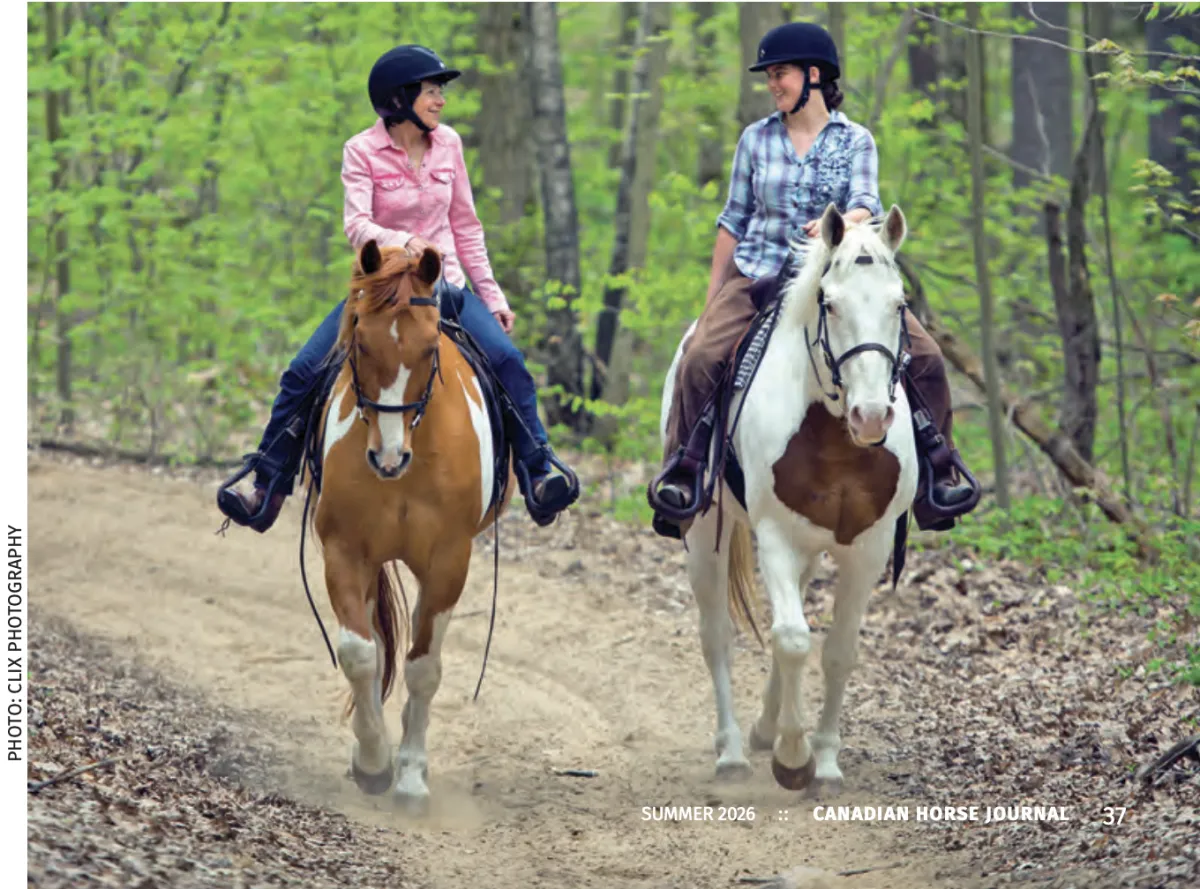
A few years back, a couple in my barn asked whether they should cut back their trail rides now that their horses were in their mid-twenties. I asked whether the horses had actually told them anything. Were they struggling on hills? Stumbling? Horses are good at reporting how they feel if we pay attention. That couple kept listening and kept adjusting, and their horses, now in their early thirties, are still out on the trail an hour at a time, three times a week, mostly on flat ground these days.
Every senior sets his own timeline. Most will need some attention to temperature, since older horses regulate heat poorly and find warm or humid conditions taxing. Arthritic horses do better off hard footing. Horses that take a long time to recover need shorter sessions than they used to. When range of motion is a problem, ease back on steep terrain and cavalletti. And nearly every older horse needs a warm-up close to twice as long as the one he got at ten.
The principles I keep coming back to
Prioritize consistency over intensity. Avoid long stretches of time off. Give longer warm-ups and cool-downs. Swap high-intensity routines for the occasional moderate-intensity one.
Frequency is what protects an aging body, more than the intensity or length of any single session. Along with as much turnout as you can manage, three to five sessions a week works well, even when each one is a mellow thirty minutes. What matters is that they keep happening, week after week. Long disruptions swing a horse's baseline fitness around by changing how he uses oxygen, how his neuromuscular signals fire, and how his metabolism runs, and those swings often set up lameness.
Even so, do not let everything become slow and easy. It still helps to include some slightly harder work every week or two, the kind that feels comfortably hard for the horse. Not depleting, just a little challenging. That effort recruits muscle at its current sustainable top end and prompts a hormonal response that slows muscle loss, and there is evidence it helps preserve bone density too. For some horses that means light canter intervals in the arena. For those who can no longer canter, a few rounds of brisk trotting does the same job.
Your main task with a senior horse is to stay consistent and avoid big disruptions. Do not dial back training until the horse gives you a clear reason to. Just because he can no longer do a discipline at a certain level does not mean all movement stops. There are countless ways to move a horse's body, and we now know that light, structured exercise makes a senior's life better.
The full article ran in the Summer edition of the Canadian Horse Journal, where Jec Ballou is a regular contributor.
If you want a plan built around your own horse's stage and soundness, that is exactly what Jec's customized fitness plans are for.
